Tenon and Mortise Natural Formed - traditional Lu Ban craftsmanship
The jargon in rosewood furniture - 'If you break your arm or leg, you can't break your tenon' - refers to the Eastern wisdom of this set of concave convex bite.
1. From Hemudu to Ming style furniture: a 7000 year process thread
Mortise and tenon joints were not created by Lu Ban alone. The wooden components unearthed from the Hemudu site prove that the Chinese had already mastered this concave convex joint technique as early as 7000 years ago. The term 'square and round chisel' in the Chu Ci during the Spring and Autumn Period and Warring States Period refers to it.
Lu Ban's true contribution lies in legislating regulations - he sorted out scattered tenons, mortises, and holes into neat and rigorous shapes, improved ink strokes, curved rulers, planing, and chiseling, and bid farewell to the crude era of "relying on hand feel" in woodworking. In the Ming and Qing dynasties, mortise and tenon joints were developed to the extreme in rosewood furniture. More than a hundred mortise and tenon joint styles can be seen in Ming style furniture, becoming the soul of Chinese classical furniture that is famous worldwide.
In recent years, there has been a global trend of collecting Chinese classical furniture, represented by Ming style furniture. Why were these furniture favored by people hundreds of years later? In the eyes of industry insiders, what supports the external beauty of Chinese classical furniture is their internal mortise and tenon structure.

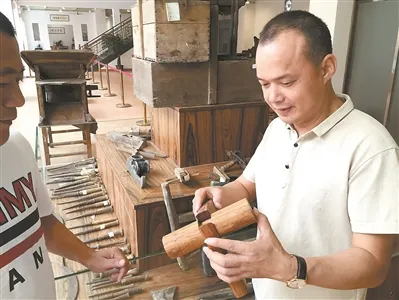
2. From opening to mortise and tenon recognition: nine processes for a piece of fully mortise and tenon furniture
Taking the example of the extensive craftsmanship inherited from the "Redwood Culture Town" in Xinhui, Guangdong, a true piece of fully mortise and tenon furniture needs to go through nine processes: shape design, molding, material selection, cutting, drying, mortise and tenon making, carving, assembly, polishing, and waxing.
The most core and essential part of it is the process of mortising and tenoning:
Marking and positioning: The ink line is straight, with an error controlled within 0.5 millimeters, following the ancient principle of "tight tenons and loose joints, large in and small out".
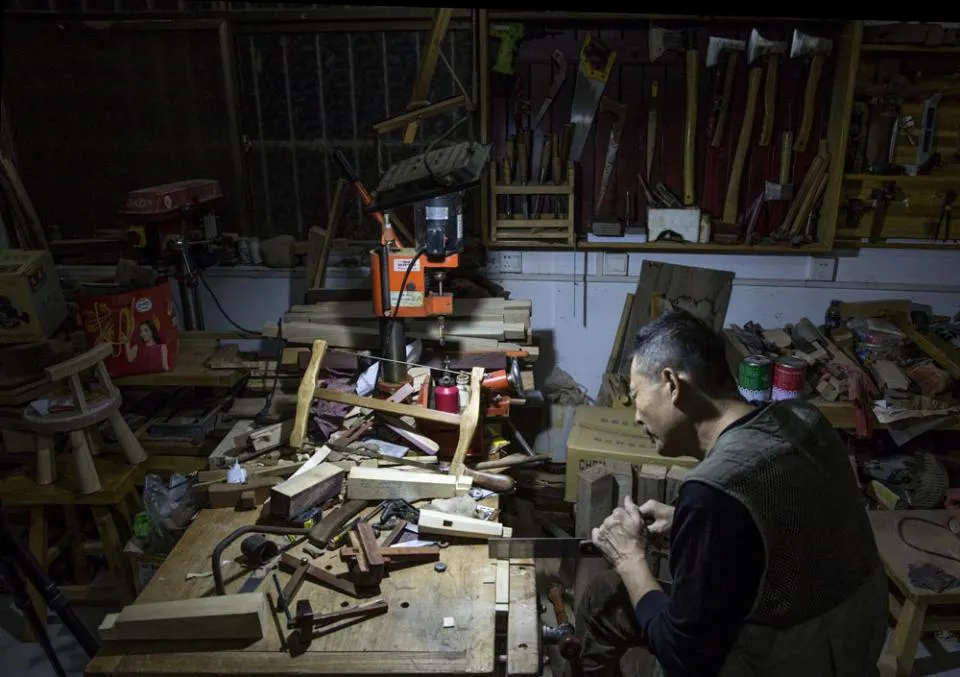
Jointing: Use a fine toothed saw to cut the initial shape of the tenon head according to the texture, use a through tenon for load-bearing parts, and use a half tenon for decorative components.
Damao: The chisel blade is vertically inserted into the wood. First, lightly chisel and position it, and then deeply excavate layer by layer. The inner wall is smooth and even, and a small amount of shrinkage is reserved according to the moisture content of the wood.
Identification of tenons: Assemble the pre opened components, check whether the size is appropriate, whether there is any tilt or corner, and promptly repair them.

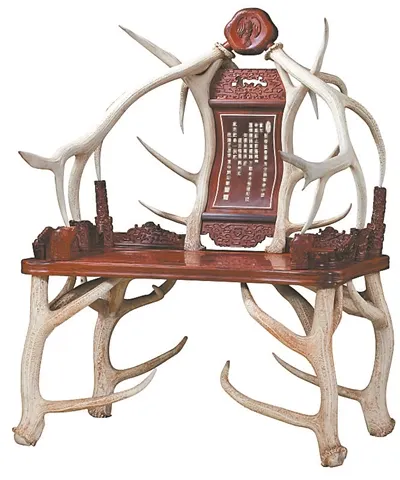
3. Three judgment dimensions of collection appreciation
If you are looking at whether a piece of mahogany furniture is worth buying, you can start from these three aspects:
Far view modeling: whether the overall proportion is harmonious, whether the lines are smooth and powerful, whether the chairs and stools are 2 meters behind, and whether the table and table Arhat bed are 3 meters behind to see the charm.
Up close, check the mortise and tenon joints: whether the joints of each component are seamless, especially paying attention to the key nodes of table legs and tooth plates, chair back corners, and drawer corners.
Touch feel: Whether the arc position, circle position, and line turning points are smooth and round, and if the feel is uncomfortable, it indicates that there is a problem with the craftsmanship.

Tenon and mortise natural - traditional mahogany furniture production
It highlights the highest level of this craft: it is not "made", but "grown". Wood, according to its own texture and personality, grows into objects through the yin and yang interlocking of tenons and mortises.
1. What is' Tiancheng '? ——Adapt to the nature of wood, rather than conquering it
The first meaning of 'Tiancheng' is to respect the nature of wood.
Adapting to drying shrinkage and swelling: Wood can breathe. A true mortise and tenon joint will not be too full on the tenon head, and the mortise and tenon holes will not be too chiseled, leaving a very small expansion joint. When the weather is humid, the wood expands and the mortise and tenon joints bite tighter; When the weather is dry, the wood shrinks and the mortise and tenon joints will not loosen or fall off. This is a living connection.
Craftsmanship based on materials: precious rosewood, yellow pear, and soursop, with high oiliness and density, suitable for precision fine woodworking; Wood such as elm and elm have good toughness and are suitable for making large frames. A good craftsman will determine the position and mortise and tenon role of a piece of wood on furniture based on its pattern, texture, and softness.

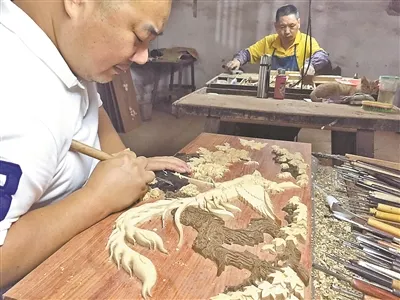
2. The Skeleton of 'Tiancheng': Several Classic Ways of 'Growth'
Clamping tenon&shoulder tenon: grip the ground like a tree root
The legs and feet of the table are not simply inserted into the panel, but are tightly "hugged" to the panel like tree roots with teeth and strips. Power is transmitted layer by layer from top to bottom, and the more it is pressed, the more stable it becomes. The shoulder tenon is even more clever, the heavier the tabletop, the tighter the bite between the legs and teeth.
Shoulder tenon: Supports like a shoulder
Furniture with waistbands, with a "shoulder" (tenon) made at the top of the legs and feet, which precisely fits the teeth (mortise and tenon). This structure is not only aesthetically pleasing, but more importantly, it evenly distributes the weight above onto the four legs, like a person carrying a burden on their shoulders.
Zongjiao tenon: bite like a bone joint
Three square pieces are placed at a 45 degree angle on one corner, with mortises interlaced to form a tightly fitted polyhedron. This is like the joints of the human body, which not only ensure absolute structural stability, but also make the appearance look clean and neat, without any excess.
Tailtail tenon: Lock like a bird's tail
The tenon of the trapezoid is inserted into the mortise and tenon of the trapezoid, and once it is fastened, it is impossible to pull it out from the vertical direction. This structure is naturally designed to "never separate" and is commonly used in places that require strong tensile strength, such as the panels and side panels of drawers.

3. How to appreciate this' natural beauty '?
Look at the structure of "living": Try gently shaking the chair or table to feel its overall rigidity. True mortise and tenon furniture, when shaken, is a cohesive and resilient micro movement, rather than a loose or loose connection point.
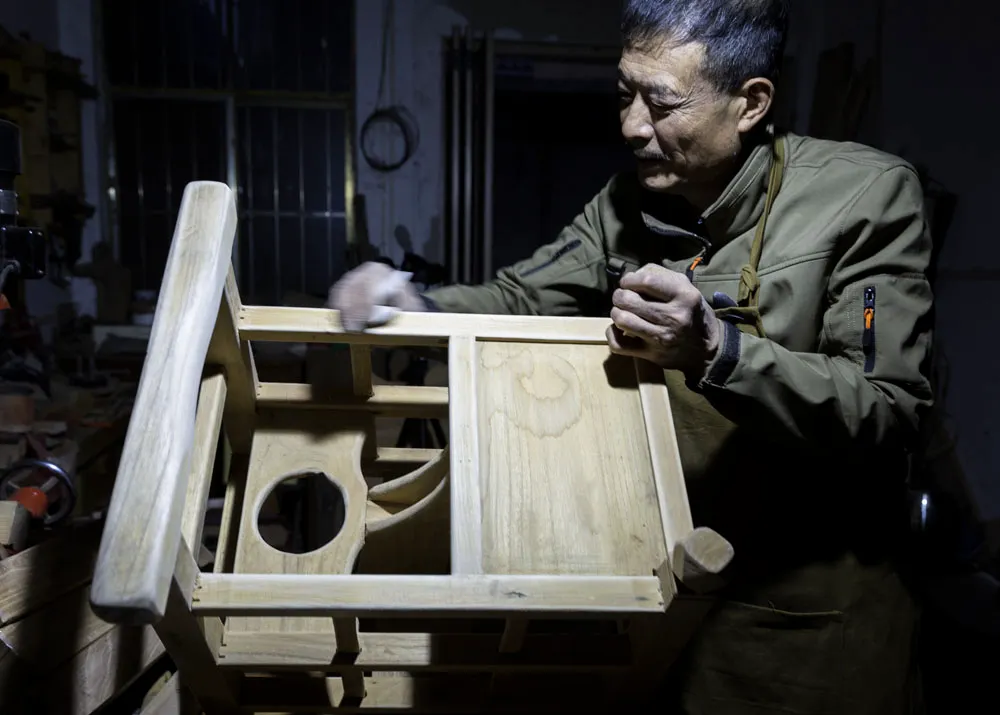
Smooth tactile sensation: Touch the joints of all components with your hand. Whether it's a right angle, rounded corner, or curved line, the transition should be extremely natural and smooth, as if it grew from a whole piece of wood, rather than being pieced together.
Listen to the sound of "reality": gently tap different parts of the furniture with your finger joints. The sound should be solid, crisp, and consistent, rather than hollow, muffled, or noisy. This can help you determine whether the internal structure is full and whether there is any cutting corners.
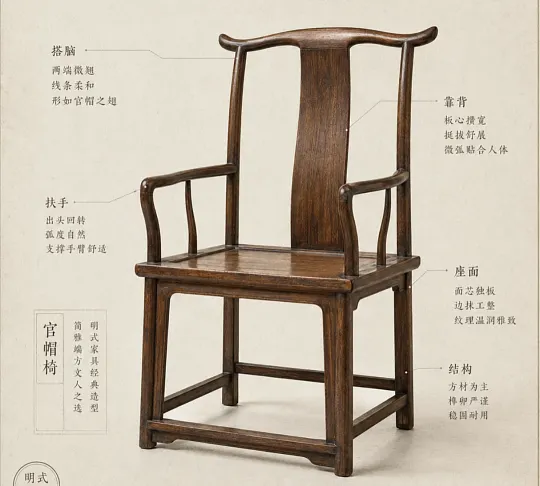
The essence of Ming style furniture lies in "cherishing wood like gold". A problem that can be solved with one material should never be solved with two. Every line and every component has its own functional reason for existence, ultimately presenting a refined and peaceful appearance after washing away the lead. This' simplicity 'is precisely the highest expression of' Tiancheng '.

Read more and welcome to visit adawe-store


Comments
Post a Comment